Should I leave my Holiday Let Agency?
>4 minute watch // updated
 by Kelly Odor, Marketing Professional
Key Takeaways
- Signs your holiday let agency isn’t earning its fee
- Options: self-manage, co‑host, or switch to a better agency
- How property management software and local support make it easier.
Is it time to leave your Holiday Let Agency? Self‑manage or go hybrid!
If your holiday let is only just breaking even and you’re still deeply involved despite paying an agency, it’s natural to question whether to stay, switch, or go it alone.
This guide walks through your options, what to watch out for, and how tech and trusted local help can give you a more hands‑off experience without sacrificing guest satisfaction.

If your agency isn’t protecting your time, income and guest experience, it’s time to rethink how you manage your holiday home.
Should I leave my holiday let agency and go it alone?
In a recent Facebook forum, a member asked "I have a self-catering holiday home on the Kent coast which has been with an agency for two years. It is just about breaking even. I'm not massively happy with the agency. They don't understand the seasonal nature and so we're hardly booked off season, and they don't proactively look for maintenance issues which means there's a refund if guests complain. What should I do?"
Here is our response...
When your agency isn’t earning its fee
From poor off‑season bookings to reactive maintenance, the problems you described are common red flags that an agency isn’t delivering value.
Low occupancy outside peak season, and a lack of proactive checks all point to missed revenue and higher risk of complaints.
On top of that, if you don’t trust their business, you’re paying for peace of mind you just don’t have.
Agencies typically charge 20–30% commission, so the service should clearly outweigh what you could achieve with the same budget in tech plus local support.
If you’re breaking even with an agency, it’s a good moment to pause and ask whether a different set-up could get you better results.
Your main options: agency, self-manage or hybrid
If you are reconsidering working with an agency, you broadly have three routes:
- stay with an agency (perhaps a better one),
- self‑manage with the help of tech, or
- choose a hybrid such as a co‑host.
A stronger agency may understand seasonality on the Kent coast, invest in professional photos, apply smarter or dynamic pricing and provide proactive cleaners and maintenance, while still keeping things hands‑off for you.
However, you’ll still pay a sizeable commission and may feel less in control.
Self‑management can improve margins because you’re not paying full management fees, but it does add responsibility for pricing, marketing, guest messaging and operations.
A hybrid model, where you use property management software or Marketing Software plus a trusted local person or co‑host, often hits the sweet spot between control, income and your need to be more hands‑off.
How tech can replace a lot of what your agency does
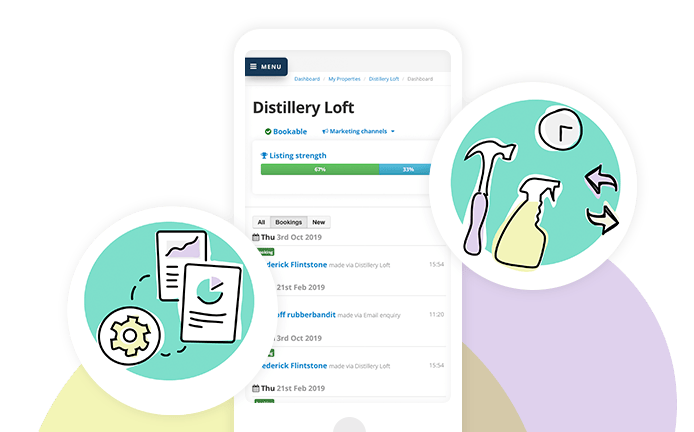
Modern property management software like Bookster can take on a significant amount of your agency’s 'back office' work.
It can connect to major marketing channels such as Airbnb, Vrbo and Booking.com, display live calendars and 'Book now' buttons on your own website, and manage rates across seasons so you’re not guessing at pricing.
Automated guest emails, secure payments, damage deposits and ID verification reduce both admin and risk, and the Guest Assistant helps you handle repeat questions without being glued to your phone.
For on‑the‑ground coordination, Bookster includes cleaner and maintenance tools so your local team can see bookings, get notifications and confirm work without you chasing them by message threads.
You can also access dashboards, analytics and management reports to see how your property is performing over time, wherever you are.
Putting local support in place when you don’t live nearby
Because you’re not local and don’t want guest conflict, your biggest decision is who will be your 'go‑to' person on the ground.
That person (or team) might handle meet and greet, key handover or smart lock setup, urgent issues by phone, simple repairs, face‑to‑face departures where needed, and cleaning and inspections after each stay.
Sometimes a trusted cleaner will take on this wider role; in other cases you might choose a local agency on a lighter‑touch contract or an Airbnb co‑host for guest communication and emergency support.
Whichever route you choose, clarify expectations, fee structure and response times in writing.
Combine that agreement with your software tools so they see live bookings and instructions, reducing your day‑to‑day involvement while keeping standards high.
A simple way to compare your options
Before making a decision, compare the total annual cost of your agency (commission, extras, any hidden fees) with a realistic package of software plus local support.
List what you need to feel truly hands‑off: reliable cleaners, proactive inspections, responsive guest messaging and robust payments and contracts.
Then ask: which combination gives you that experience for the same, or better, net income?
If your current agency cannot meet those expectations and won’t adapt, it’s a strong signal to explore alternatives.
With the right mix of tech and trusted local help, many owners successfully move from 'just breaking even and stressed' to 'profitable and genuinely hands‑off'.
So you decide to leave...what happens next?
Once you’ve decided to leave, there are a few practical details to line up so the transition is smooth and professional.
Decide about your existing channel listings
If your self-catering property sits under your agency’s account in the channels like Airbnb, you’ll need a planned transition rather than an overnight switch.
Speak to the agency about contract terms, notice periods and who owns the content, then consider creating your own host account and new listing so that future bookings and reviews are attached to you.
Channel reviews
It's important to check what will happen with the existing reviews. If your agency closes the account on the channel, then there is a risk that your existing reviews will disappear. Talk with the channels and your agency to find options to avoid this as the reviews will be useful when you leave the agency. If you can't find a solution, download the reviews, so you can use them in other formats, such as on your social media.
During the handover, property management software can sync calendars and prices across channels, helping you avoid double bookings while you move away from the agency.
Other things to sort out when you leave an agency
Start by reviewing your management contract to understand notice periods, how existing bookings are handled, any early‑termination fees and whether the agency is still entitled to commission on stays that take place after you’ve given notice.
This will shape your timeline and helps you avoid surprises.
Who is responsible for existing bookings?
Clarify who is responsible for existing bookings during and after the handover period, and get it in writing.
In many contracts the outgoing manager must stop taking new bookings from a certain date, while you agree to honour all reservations already in place and settle any due commission after guests depart.
Where bookings sit in the agency’s systems, ask for a full schedule of arrivals with guest contact details so you can communicate any change of management and reassure guests.
Keys, access codes and on‑the‑ground support
Treat keys and access as a mini‑project of their own.
Make sure all physical keys, key‑safe codes, smart lock logins, alarm codes, garage remotes and Wi‑Fi passwords are collected, updated where needed and recorded in one secure place before the contract ends.
At the same time, confirm your future arrangements for cleaning, linen, inspections and maintenance so there is no gap between the agency stepping away and your new cleaner, co‑host or manager stepping in.
Booking reports you should request before you leave
Before the relationship ends, request detailed booking reports so you have a benchmark for how your property performed under the agency.
Ask for at least the last 12–24 months of data showing nightly rates, length of stay, occupancy, channel mix, seasonality patterns, discounts and refunds, broken down by month.
You can then use your property management software to track the same metrics in future and directly compare performance once you’re self‑managing or working with a new partner.
Why it pays to leave on good terms
Finally, aim to leave on good terms. Even if you’re unhappy, keep your notice and conversations factual and polite as you never know when you might want to use that agency again, ask for a reference for future lenders or insurers, or need their help with historic booking records.
Thank them for what has worked well, confirm the agreed end date and handover items, and then focus your energy on setting up the new, more sustainable way of managing your holiday home.
Frequently Asked Questions
- How do I calculate if my holiday let agency is worth the fee?
- Work out your net income after agency commission, cleaning, maintenance and refunds, then compare it to a realistic forecast using software plus local support at current market rates.
- Can property management software help if I live far from my holiday home?
- Yes, cloud‑based systems let you manage bookings, payments, guest communication and cleaner schedules remotely on mobile, tablet or desktop, so you can stay in control without being nearby.
- How do I find a reliable local co‑host or on‑the‑ground contact?
- Ask local cleaners and trades, check local holiday‑let Facebook groups and co‑host listings, then interview candidates, check references and agree clear responsibilities, fees and response expectations
You don’t have to choose between a frustrating agency and doing everything yourself.
By combining specialist property management software with the right person on the ground, or by finding a better‑fit agency, you can protect your time, improve your income and give guests a more consistent experience.