How to advertise your holiday let for free (and which channels work)
6 minute read // updated
 by Robin Morris, Co-Founder + Managing Director
Key Takeaways
- Free advertising channels range from Online Travel Agencies (OTAs) to Google and social media
- Your own website is the only channel where you keep 100% of the booking value
- A mix of free channels plus one direct booking tool consistently outperforms OTAs alone
You don't need a big marketing budget to get your holiday let in front of guests.
There are more free advertising options available today than ever - but "free" doesn't always mean effective. Some channels bring genuine enquiries; others just eat your time. This guide cuts through the noise and tells you what actually works, and why your own website belongs at the centre of the strategy.

Where to advertise your holiday home
What "free" advertising actually means for holiday lets
Most advertising channels for holiday lets are free to list on - you pay nothing until a booking is made. What you pay then is a commission, typically between 12% and 20% of the booking value depending on the platform. So "free" is relative. You're not paying upfront, but you're paying every time a guest books.
True free advertising means channels where you keep the full booking value. That means your own website with a direct booking system, organic search (Google), social media, and email to past guests. These take more effort to build - but once they work, the returns compound.
Where to Advertise your Holiday Rental
1. Airbnb and Booking.com
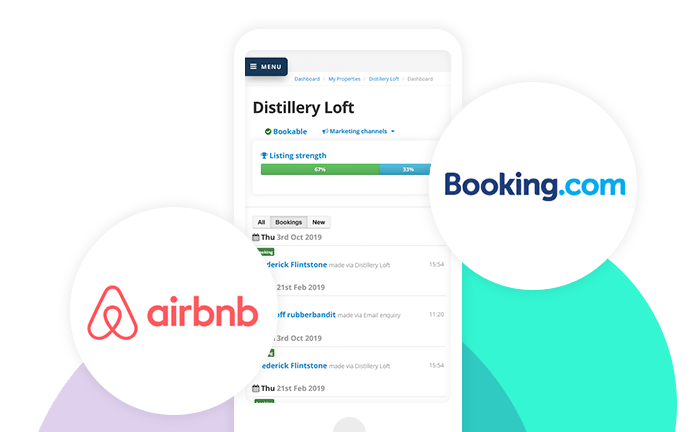
Airbnb and Booking.com are the obvious starting point, and for good reason. They have enormous reach, built-in payment systems, and guests who trust them. Listing is free; you pay commission when a booking is made - typically around 15.5% under the host-only fee model, and 15–18% on Booking.com.
They're worth being on - but they work best as one part of your strategy, not the whole of it. Relying on them exclusively leaves you vulnerable to algorithm changes, policy shifts, and the steady loss of margin to commission fees.
2. Google - free listings and organic search
Google offers two genuinely free routes for holiday lets: Google Business Profile and organic search traffic to your website.
A Google Business Profile (formerly Google My Business) is free to set up and puts your property or agency on Google Maps and in local search results. If you manage multiple properties in a specific area, this is well worth the 20 minutes it takes to set up. Keep the photos current and respond to reviews - both improve visibility.
Organic search is slower but more powerful. If your website is properly set up with good descriptions, location-specific content, and a fast, mobile-friendly design, Google will send you free traffic over time. This is why your website matters so much - it's the destination for all this free traffic.
3. HomeToGo and niche listing sites
HomeToGo aggregates listings from across the web, including your own website if you submit it. Other niche platforms - regional cottage directories, activity-specific sites, pet-friendly listing portals - can bring targeted traffic from guests who already know what they want. These visitors tend to convert better than broad OTA traffic because they're further down the decision journey.
Listing on these sites is usually free or low-cost. The key is to be selective: pick the ones that match your property type and location rather than listing everywhere and diluting your time.
4. Social media - Instagram and Facebook
Social media is genuinely free to use and works well for holiday lets, particularly on Instagram. A consistent feed of property photos, local area shots, and seasonal content builds an audience that you can market to directly. Unlike OTAs, you own that relationship.
Facebook is especially useful for reaching repeat guests. A simple page with a booking link, guest photos, and regular posts keeps your property front of mind when people are planning their next trip. Facebook Groups for local areas or specific traveller communities (walking holidays, dog-friendly breaks) can also generate enquiries at no cost.
The honest caveat: social media takes consistent effort and rewards properties with strong visual appeal. If you have one well-photographed cottage in a beautiful location, it's a strong channel. If you manage a large portfolio, the effort per property may not justify the return.
5. Email to past guests
Your past guests are your warmest audience. They've already stayed with you, they know what they're getting, and they're far more likely to book again than a cold visitor from an OTA. Emailing them - even once a season with availability and a small returning-guest offer - is one of the highest-return things you can do, and it costs nothing beyond the time to write it.
You need a direct booking system to make this work properly. If all your bookings come through Airbnb, you don't own the guest relationship - Airbnb does, and their terms prevent you from marketing to guests outside the platform.
The channel most agencies underuse: their own website
Your website is the only channel where you take 100% of the holiday home booking value. No commission, no algorithm to appease, no risk of policy changes wiping out your visibility overnight. Yet many independent agencies either don't have a proper website, or have one that can't take bookings directly.
A holiday let website doesn't need to be complicated. It needs:
- Fast loading speed (slow pages lose guests before they've read anything)
- A real-time availability calendar
- A secure online booking and payment system
- Clear, honest property descriptions with good photos
- Your contact details and a reason to get in touch
If your website has all of these, it becomes a genuine booking channel - one that gets more effective over time as Google sends you more organic traffic and past guests return directly.
What doesn't work (or works less than people think)
Paid social media ads can work for holiday lets, but they're not free and the targeting needs careful setup to get a good return. Most small agencies are better off investing that budget into their website first.
Press releases and PR occasionally generate traffic spikes - if a travel journalist writes about your property, you'll see a temporary surge in interest. But it's hard to reliably engineer and even harder to sustain.
Building a channel mix that works
The agencies that get the best results don't advertise holiday homes on a single channel. They list on one or two Online Travel Agencies (OTAs) to capture demand, maintain a website for direct bookings, and use email and social media to keep past guests warm. Over time, the proportion of direct bookings grows - and with it, the margin per booking.
Start with the channels that take the least time to set up: your OTA listings, a Google Business Profile, and a website with a booking system. Then add email and social media once the basics are working. This sequence matters - there's no point driving social traffic to a website that can't take a booking.
Frequently Asked Questions
- Is it really free to advertise on Airbnb and Booking.com?
- Listing on both platforms is free - you only pay when a booking is made. Airbnb typically charges 15.5% while Booking.com typically charges 15–18% commission per booking.
- Do I need my own website if I'm already listed on Airbnb?
- Yes. Airbnb owns the guest relationship, not you - their terms prevent you from marketing to guests outside the platform. Your own website gives you a direct booking channel where you keep 100% of the booking value and can build a repeat-guest base.
- What is the best free way to advertise a holiday let in the UK?
- A combination works best: list on one or two major OTAs for broad reach, set up a Google Business Profile for local search visibility, and build a direct booking website so you can convert traffic and past guests without paying commission.
- How do I get more bookings without paying for advertising?
- Focus on the free channels that compound over time: organic search traffic to your own website, email to past guests, and a consistent social media presence. These take effort to build but cost nothing to run once established.
- Can I list my holiday let on Google for free?
- Yes. Google Business Profile (formerly Google My Business) is free and puts your property in Google Maps and local search results. You can also earn free organic traffic to your website through good SEO - clear descriptions, location-relevant content, and a mobile-friendly site.
- What is a channel manager for holiday lets?
- A channel manager is a tool that connects your property calendar to multiple booking platforms - Airbnb, Booking.com, Vrbo and others - and keeps availability in sync automatically. It prevents double bookings when you're listed across several sites and saves a significant amount of admin time.
Free advertising works - it just requires you to think about where your time goes. OTAs give you visibility quickly but take a cut of every booking. Your website, Google, social media, and email give you more control and better margins, but they take longer to build.
The goal isn't to be everywhere. It's to own the guest relationship on at least one channel where you keep the full booking value. Your website is that channel. Everything else should point back to it.
If your website isn't set up to take direct bookings yet, Bookster's website builder is designed specifically for independent holiday letting agencies - with real-time availability, online payments, and your own branding. Start a free trial and see how much difference a proper direct booking site makes.