Vertically Integrated Tool for Holiday Rental Managers
4 minute read // updated
 by Robin Morris, Co-Founder + Managing Director
Key Takeaways
- Bookster is a vertically integrated platform for holiday rental managers
- One system covers your website, bookings, guests, owners, and channels
- Vertical integration means less friction, fewer tools, and more control.
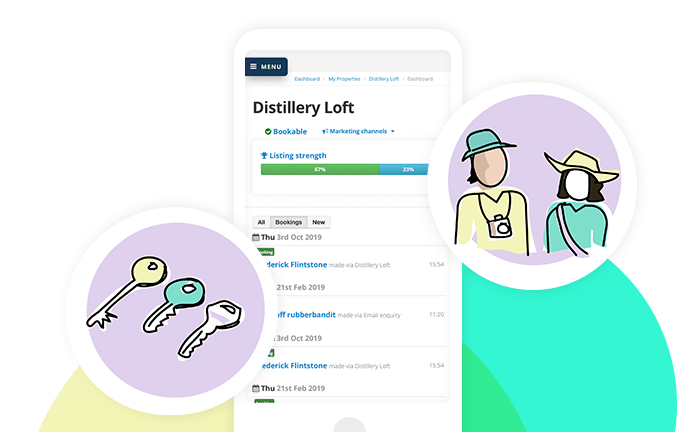
I've been using the phrase "vertically integrated" a lot recently when talking about Bookster. It came up in an episode of The Bookster Podcast, and the reaction was: "that sounds impressive, but what does it actually mean?"
Fair point.

We didn't set out to create a hundred small tools. We set out to build one good one.
In business, vertical integration simply means that a company controls multiple stages of a process - rather than relying on a patchwork of separate suppliers and tools.
Think of it this way.
A holiday rental manager running their business today might use:
- One tool to take bookings on their own website
- A separate channel manager to push availability to Airbnb and Booking.com
- Another system to send emails to guests
- A spreadsheet (or yet another tool) to manage owner statements
- A different provider for their website
- Something else entirely to handle payments and damage deposits
Each of those tools works in isolation. And each junction between them is a potential point of failure - a missed sync, a double booking, a guest who falls through the cracks.
Vertical integration is the antidote to that.
How Bookster is Vertically Integrated?
Bookster is built so that one system covers the full journey - from the moment a guest discovers your property, to the moment they check out and leave a review.
Here's what that looks like in practice:
Your Website
Bookster can power your website directly, whether that's an Instant website or a fully custom-built one. Your property listings, availability calendars, and booking engine all live in Bookster - so there's no third-party integration to break.
Your Channels
From inside Bookster, you can connect to Airbnb, Booking.com, and other marketing channels. Bookster becomes the source of truth: your photos, descriptions, rates, and availability flow out to the channels - not the other way around.
Your Guests
Enquiries, quotes, booking confirmations, guest messages - all managed from one place. Guest Messaging brings together messages from Airbnb, Booking.com, and direct bookings so nothing gets missed.
Your Bookings
Payments, damage deposits, ID verification, extra services - all handled within Bookster. No separate payment gateway to configure. No manual chasing of damage deposits.
Your Owners
If you manage properties on behalf of owners, Owner Statements and Owner Management are built in. Your owners get support without you needing to export spreadsheets.
Your Operations
Cleaners, maintenance, analytics, compliance - it's all there. Your team works from the same system as your guests and your owners.
Why does this matter?
Because every tool you add to your stack is a tool you have to manage, pay for, and troubleshoot.
The more integrated your system, the more reliable it becomes.
There are fewer things to go wrong.
Fewer places to check when something doesn't look right.
Fewer invoices to pay.
And from a business strategy perspective: when your data all lives in one place, you can actually use it.
You can see which properties are performing.
Which channels are converting.
Which guests are returning.
That's hard to do when your data is scattered across five different systems.
This is what we've built
Bookster has been quietly - and sometimes not so quietly - building out this stack for years. We didn't set out to create a hundred small tools. We set out to build one good one.
The result is a platform where the channel manager talks to the booking engine, which talks to the guest notifications, which talks to the owner statements, which talks to the website - because they're all the same system.
That's vertical integration.
And that's Bookster.
Hear it on the podcast
We talk through this in more detail in Episode 14 of The Bookster Podcast