The Bookster Podcast: How to Demo
- Episode 18
Discover how probing questions transform a standard software walkthrough into a mission-critical solution for a holiday rental business.
Who's Talking?
- Simon Beattie (Host)
- Robin Morris (Co-Founder + MD - Bookster)
- Jonny Brannen (Sales Lead - Bookster)
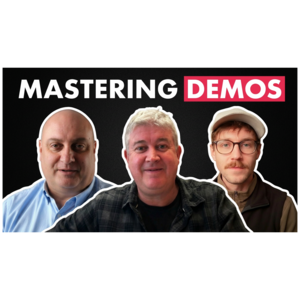
In this episode of the Bookster podcast, hosts Simon and Robin are joined by Account Manager Jonny to pull back the curtain on the demo: a pivotal moment in the holiday rental software journey.
Moving beyond simple feature walkthroughs, the team discusses how demonstrations serve as a mission-critical bridge between a prospect’s problems and a software’s solutions.
Key Insights from the Episode:
- The Evolution of the Demo: Jonny shares his transition from "feature-focused" presentations to a process centred on "ethical sales" and solving specific pain points.
- Probing for Solutions: Learn why asking "What’s made you book a demo now?" is more effective than standard questioning for uncovering hidden business challenges.
- Mission-Critical Trust: Robin explains why demos are essential for software that handles the day-to-day running of a business, as they build the rapport and confidence that a pre-recorded video simply cannot.
- Qualifying for Success: The team discusses why they occasionally turn clients away or refer them to agencies if the software isn't a perfect fit, ensuring long-term satisfaction over short-term gains.
- Handling the "No-Show": A candid look at the "bane" of the sales job (the 20-30% of prospects who go radio silent) and why the team prioritises low barriers to entry.
Whether you are a property owner looking to fill your calendar for the 2026 season or a SaaS professional looking to refine your sales funnel, this conversation offers practical advice on using demos to drive genuine business growth.
Credits
- Producer
- Simon Beattie
- Editor
- Simon Beattie
Subscribe
Transcript
- Hello, I'm Simon and welcome back to the Bookster podcast from Inside the SaaS Holiday Rental Software Company, Bookster, based in Edinburgh, Scotland.
Minute 1
- Thank you, Simon.
Good morning.
Nice to see you again.
It's been a little while since we've done one of these.
Yes, it's been a wee bit of a break, hasn't there yet? Are you? Nice to be back.
And they were joined by Johnny Brown and again, their account manager for Bookster.
Johnny, welcome back to the podcast.
Thank you, Simon.
Nice to see you again.
Johnny is the only one who has an authentic looking podcast microphone.
He's the only professional podcast that I've just been curious about.
But no, last episode we did was on the visitor Levy, which was a very interesting topic.
And this episode we're going to be talking about demos, what form they take, how you do them, and sort of what happens in a demo with Bookster.
But maybe Robin, first of all, we could start with where does a demonstration come in the process of a client onboarding with Bookster? Minute 2
- Yeah, so it's a little bit down the road of the sales funnel, as opposed to as you might call it, where the, our perspective client might have seen books for quite a few times, being on our website or seen as such a show or seen as some social media or something, and as clicked around, they will have, they'll know a reasonable amount about Bookster by the time they actually get into a demo.
They will have requested a demo directly in order to end up having getting one.
So they'll either have requested one through our website or they might have done it through something like Facebook.
So at that point, they have a reasonable bit of knowledge of who we are and where we fit in, Minute 3
- and they don't come to us, and totally blank, or usually reasonably knowledgeable.
The other way that they might come to us is if they've registered for Bookster.
So you can, in theory, well, not just in theory, in practice, you can just sign up for Bookster and start using it yourself, and pay for it and just become a client that way.
And you fully encourage anyone who's listening to do that, because then Johnny doesn't have to do a demo at all.
He'd be delighted.
But, in actual fact, so they may, they may welcome to us that way, they might register, not do very much, and then Johnny would potentially reach out to them and say, look, you register, and you can see that you probably, you know, you do have holiday rentals, maybe through the domain of the email address that they've registered on or something.
And, you know, would you like an actual demo of Bookster? Minute 4
- So that's when, you know, we're perhaps being a bit more proactive trying to encourage them to do a demo.
So, I'm actually, even if they register and pay themselves, I suspect either we might still try to do a demo, but we would certainly very quickly want to be speaking to them, and, you know, doing a proper onboarding, etc.
Which the demo, partly, some of that information is contained within a demo.
So it's useful for people to have one almost even if they have decided to, or have already kind of committed to use Bookster, so it kind of fulfills a couple of, a couple of jobs, as well as really in the way.
So yeah, perhaps, Johnny, you might want to talk about, yeah, want it? Minute 5
- Maybe your revolution, I suppose, perhaps, on demos and where you started, and how you go about it now.
Yeah, well, I guess one of the first things is to probably break down what a demo is.
So a demonstration, just shortened down the demo.
So be that a video call, or very occasionally an in-person meeting, where we can go through this software together, looking at the features and functionality of Bookster, and really how that fits in to the lead, or the prospect who's attending the demo, how that works into what problems they have, how can books or solve them, and also what goals they have, whether that's to increase bookings, increase revenue, make the whole process of managing their holiday rentals easier, dealing with guest communications.
So we're kind of looking at the software as a whole, Minute 6
- and how that can work for them.
And Robin touched on it as well with people occasionally, just signing up by themselves, they can completely sign up with Bookster, and yeah, again, that's great.
But there's downsides to people not having a demo.
There's part of that, part of that would be the kind of qualification process.
So if I can get someone on a phone call first, and we have a bit of a chat about their business, what kind of properties they have, some of the ways that they operate.
That's a nice way, just to confirm, yes, Bookster is going to work for you.
And occasionally you'll get people who sign up, who are great clients, they know exactly what they're doing, they know what they want.
And then every so often you'll get someone who signs up, and a little bit down the road, they realise maybe Bookster wasn't what was suitable for them.
And so usually, if they were on a demo, we can figure that out in the process.
And that saves both parties a little bit of time. Minute 7
- But in terms of where I started with demos, I started at Bookster in 2020.
And my initial demo process was, I guess, very feature and software focused.
At the time I was learning the ins and outs of Bookster, how it worked.
And really trying to show off the best bits to clients.
I think they would love this.
And that's, it works sometimes.
But eventually, especially during lockdown, I tried to do some sales courses, and really trying to improve my kind of process for the demos.
And I learned that, or came to the realisation that the leads or the prospects, they don't always care about what we think is great about the software.
So they want what can fix their problems, and they want help to reach their goals. Minute 8
- So as much as possible, ideally, like I mentioned, if I can get an initial phone call before scheduling a demo, it means that I can do a little bit of research and can I ascertain what they're looking for from Bookster.
And really there are reasons for looking at the software and booking in the demo.
And sometimes it can be a little bit more difficult to get people to open up.
So one of the, one of the things that you want to find out is, is there pain points, if you will, or there are problems that they want to solve? And usually if you ask someone what their problems are, they're not going, if you ask it so directly, they're maybe not going to be as honest.
Or they're just going to say they've got a bit of an interest.
So a really good way that I learned was to use what we call probing questions.
And that helps them to kind of expand on the problems that they're facing by their current method of working, Minute 9
- whether that's with an alternative software currently or no software at all.
And really ensure that Bookster can fix the problems and make their life easier.
I guess provided that Bookster actually can.
So if someone comes to Bookster and says, "Here's my problem." And I know we can't solve it.
It's no good for either party if I say, "Yeah, you should try Bookster anyway." It gives us a little bit of money for a month and then they leave.
But we've spent time, effort with the rest of the team bringing them on board.
Also it's good to know.
They may well leave a pretty horrible review and say, you know, "I was missled this or whatever." So there's no one's interest that someone comes on thinking that we're going to solve the problem.
No, I'm not saying it itself, isn't it? Because I mean, I think I'm pretty sure a lot of bigger companies might just sort of get away with it.
But you guys are quite honest up front and say, "Well, you're not right for us or we're not right for you, perhaps." Minute 10
- And you must go down well with the client, I would have thought.
I think so, yeah.
And that's oftentimes there's people who are, maybe their decision is between a software and self-managing and looking at a potential agency to deal with it for them.
And usually people are quite up front with that kind of decision that's on their hands.
And if they say, "I don't have a lot of time," or "I really don't want to deal with this." Then quite a lot of the time I can say, "Well, we've got agency clients all around the UK.
Where are you located?" And I can put you in touch with one of our existing clients.
And that way they're still getting a good result, even just from that initial chat, even if they don't become a booster client already.
So a part of that, I guess it's ethical sales, if you will.
Which I guess everybody wins it in that side.
Nobody's going to leave us a bad review because we've not tried to force them to use Booster.
And in terms of when you do the demonstrations and I guess from what you're saying, Minute 11
- you wanted to be as early on in the process as possible to save any heartache from either part of you, or either part of you.
So how quickly would you want a demonstration to take place? Yeah, the sooner the better, ideally.
So if, like I said, we get inbound leads, whether that's from demo requests or registrations or Facebook adverts.
So if someone picks up the phone, I can get a little bit of understanding about their business.
And ideal scenario is, are you free later today or tomorrow so that Booster's still on their mind.
Oftentimes it's not feasible.
People are working other jobs as well, or they've got time commitment elsewhere.
So really we want to get that demo booked as soon as possible.
And that usually increases the chances of them showing up and appearing to the call.
So do you? Sorry, go ahead. Minute 12
- I was just going to touch on once we are there trying to get them to open up.
So I touched on those probing questions.
So instead of saying, what's your, what's your problems? How can we solve them? It's more of a what's made you book a demo, but the emphasis isn't on the what.
It's what's made you book a demo now.
What's made you interested in Booster now.
And they can have a think, okay, well, this is the problem that I'm having.
Just for example, the channel manager they're currently using is giving them double bookings.
It's not synchronizing well enough for them and it's causing them problems.
Okay, and then we can dive deeper into that.
How long has that been going on? They'll tell you how long that's been going on.
Is there any other examples of things like this? So now they're telling me about the problems that they're having with either an existing software or the problems that they're facing without a software. Minute 13
- And from there, now I've got the examples of the problems that they're facing.
And now I know the problems.
I know if we can solve them, which more often than not, we can.
So there's the solution.
Well, Booster can do X, Y, Z.
Your problem's been going on for X amount of time.
Let's get that solved now with this process.
One, two, three.
So that's the that's the goal.
Yeah, and that makes it sound a lot easier than it can be.
Sure.
I mean, is it is this process easier in person or is it always online? What do you prefer? I would say 99% of the time it's video calls and allows everyone a little bit of flexibility with time or wherever they're located.
And then every so often we'll get somebody maybe want to come in and meet us in the office or Robin and I recently been invited out to a farm to kind of take a look at their holiday lips and look through the software together. Minute 14
- Well, video demonstrations are great.
I think there's something.
Something about building rapport in person being able to kind of gauge the for lack of a better word vibe of the of the person of the room.
And you know what it's like on a video call sometimes issues people talking over each other or whatever.
So I would love it if everybody wanted to come and meet in person, but we've got clients all over the all over Europe and across bigger ponds.
So it's not always feasible.
Yeah, we'll start sending you out to these places pretty soon, Johnny.
Maybe Mauritius.
The hammers.
Yeah, come back.
Come back with a lovely time and lots more.
I think one question. Minute 15
- If you're listening to this and maybe go your own or trying to start your own software company or trying to sell software as a service.
Maybe why bother with them was at all.
Why do that? So why just not let people sign up themselves or have a few emails going backwards and forwards or having a video.
Like over your software that runs through things or whatever.
And certainly, you know, for a long period of time, when we were maybe we maybe had this.
Well, maybe slightly a typical journey where Bookster was not always the main thing that we were doing.
It was kind of more of a side possible.
And we were just, you know, it was something that happened in the background.
And we didn't actually have a salesperson doing anything or nobody that would give demos or whatever.
And so it was very much, you know, ad hoc word of mouth or we did allow people to sign up. Minute 16
- And it's quite difficult to get any sort of traction really to get anyone to sign up or user themselves.
Especially when it's what we're actually selling is actually quite fun core to someone's business.
It's not a little utility that they're using every so often.
It's kind of like the day to day running of their business.
So I think given that that is the case, you have to build up a bit of trust.
And they have to have confidence in what you're doing and the rapport is Johnny's talking about where it's like, you know, we trust these people, we understand what they're trying to do, we understand the direction they're going in.
Yes, they're doing exactly the rights of things or at least it's a very good fit for my business.
Like this is it's representative of why I'm trying to do as a business. Minute 17
- And most of that is much easier to achieve in a demo than it is in a video or which people probably wouldn't watch or they might not engage with or whatever.
So yeah, that's I think it for us anyway.
And I think for a lot, if you're trying to run software that is mission critical for another business, I suspect something like this is always going to be required.
And it's, you know, doing these demos, do they highlight issues? I mean, after a demo, would you go back and have a chance to relax to this person's highlight? They want to do this.
You know, maybe we need to talk about this between ourselves, you know, and develop the process of the software a bit more based on a demo.
Is that what happened or? Yeah, 100%.
So a lot of times there's people will have, they'll have questions.
So again, another reason why just having a video that says here's what Bookster does. Minute 18
- Wouldn't be ideal.
They're going to have 100 questions and more often than not if they watch that video, they're probably never going to email or they're never going to get in touch or give you a phone call to ask those questions.
The questions haven't been answered and they're going to leave.
Whereas if we're talking, then somebody can ask those questions, then and there and get their answer.
But a lot of the time, some people have a way that they want to work or something that they want to get out of it.
And so occasionally we'll come back and say, okay, this person is interested in Bookster, but there's they want X, Y or Z.
And we have to look at that and say, well, we have a solution.
It's just slightly different to the way they operate at the moment.
In which case we can say we can still get you that same end result in a slightly different way, which is great. Minute 19
- Sometimes they say, oh, we want this thing.
And sometimes that's just something that we don't have.
So we would say, I would speak to Robin and we'll say, okay, well, let's discuss it at a planning session.
And then we'll come down to, I guess, a priority side of things.
If one person is asking for it and nobody else who, none of the people who are already our clients, need this or want this, is that worth our time, money and effort to develop that one thing for one person.
So I think what's quite useful as well is if there can be a kind of like, especially if we attend some events or whatever, there could be some sort of industry chatter about something like dynamic pricing or AI or, I don't know, unified inboxes or something or connecting to particular channel. Minute 20
- And what is potentially interesting is if those things are raised at the demos, then AI, you know, it's kind of filtered down to certain points.
Also, it might be useful to know why are you asking that? What do you think you'll save your time? Do you think it'll make you more money? Are you just asking it? I mean, I don't know how often this happens, more one for Johnny, but you do get some people that are just comparing like a spreadsheet almost.
They're like checking a bunch of features against one web software and another.
They're not necessarily fully thinking about, well, okay, both of these things have a channel manager tick, I'll just tick that box.
But are they kind of aware that one might not be quite as reliable as another? So you might end up getting double bookings anyway, or it might not have the direct connection to here being the fact that you actually really probably need to make the most of a channel manager. Minute 21
- Or it might be a channel manager, this design for hotels rather than all the two rentals.
So they've just ticked the box, but it's like, well, why, you know, you're asking this question, but why are you asking the question? What's the underlying thing? You just heard that dynamic pricing is a good idea because someone told you that at a conference.
What is it that you hope to get out of it? What is it that you're thinking that you might get out of this? And it's kind of quite good to drill down into that thing and get a little bit more.
Then you can offer this a real world answer as to those questions, I guess.
Sometimes, yeah, sometimes I hope the best thing to go for.
Sometimes I say, well, actually, have you thought about it? What problem are you trying to solve here? Or, yeah, we just are getting some feedback from prospective clients. Minute 22
- But yeah, it's quite nice to be able to turn around and go look what you're trying to solve.
What are you trying to actually fix by looking to tick that box on your spreadsheet? So yeah.
So, I mean, there's up we've spent quite a long time talking about the positives of demos and doing them.
There must be, maybe there's not, but I assume that if people book a demo, then cancel it or don't cancel it.
Then that's sort of a waste of your time and energy.
I mean, is there any sort of anecdotes about that happening in books today? Yeah, well, last week, for example, so on, I think a week ago on Friday, I think, book four demos for the following week and Robin, I'll attest.
Whenever something like that happens, it puts me in a very good mood.
I know I've got people that are coming into that funnel and people to speak to. Minute 23
- That's very exciting and on day day one, the first person didn't show up no communication and then it's more often than not.
It's it'll go radio silent if they haven't shown up, whether that's out of embarrassment that they haven't shown up and they don't want to do that again.
Or whether they just said they wanted to book the demo in order to get me off the phone call.
That's the sometimes you can't figure that out.
So it's, yeah, people not showing up is is an issue.
I would say somewhere between 20 and 30% of the time it can happen.
More often than not, you might be able to tell if you do get that initial conversation in on a phone call.
People who do show up are typically more engaged.
We've got a lot more questions and especially when you get onto the demo there, they have a lot more questions and they want to know more.
A lot more back and forth and conversational.
And then if people do kind of get to that demo stage, but they don't have many questions, they're not as engaged.
They're a little disinterested. Minute 24
- It feels like you're kind of doing a show and tell rather than having a discussion.
So it is a two way street in a way for the demos.
And yeah, no shows are the are the bane of this job, but it's part and parcel.
I always say the worst thing that someone can do is say no when I'm on the initial phone call.
And then the second worst is not showing up when the book.
Is there a, if you ever considered a sort of deposit scheme for them, when you get your money back when you turn up or money off when you take out the package or whatever? I think we want to try and keep that barrier to entry as low as possible.
And yeah, maybe that would restrict a few people from showing up.
Should we ever implement that? Minute 25
- Yeah, difficult to know how to, I mean, obviously sometimes genuinely people just forget.
Or, you know, the other thing is that prioritise and it's not always, it's probably fairly rarely in bad faith.
It's probably sometimes I think you're actually just want to get your call or whatever and think, oh yeah, I'll agree to that.
I don't really have to short to this, all right.
There's never any power.
I just think also they're not probably not really just thinking, oh, there is somebody who's put, you know, whenever a site of their time here.
Like, so there's they are someone trying to sell me something.
And, you know, I suppose ultimately we are, so we have to accept that.
But, you know, it's, yeah, they possibly don't think, oh, wow, there's someone else, someone there who's, you know, committed an hour and now, no one else can book a demo in that time. Minute 26
- Yeah, or Tony can't go into the talk for a walk or whatever.
Yeah.
I think maybe at the start as well in terms of kind of how things changed.
Maybe used to take it a little bit more personally.
They didn't show up and then you kind of a few years down the line, if you think if you've signed up to us off where you've signed up to something or other and somebody from that company tries to reach out.
You're never really going to answer the phone and get off the phone as quickly as possible or you're not going to pick up the phone.
So you can eventually start to see it from everybody else's perspective as well.
But then when people do either phone back or they do short to the demo and they show genuine interest, then it makes things a lot easier. Minute 27
- Guys, this has been quite an interesting chat again with demos.
We obviously encourage anyone interested in books to get a demo booked.
But as it's sort of December, I guess it's sort of next year now.
Is it we're talking or we still got spaces this year if anyone's interested? Yeah, there are still spaces if people are interested.
If people are listening to this, then do get in touch what we often always see.
And particularly this, particularly December in January is a lot of people booking their next year's holidays.
Obviously this is guests and not people who run the holiday rentals.
But if you are running holiday rentals and you think, yeah, I want to get my bookings fill up the calendar for summer next year or for Easter.
This is the sort of time people are making those those bookings and looking at their holidays or wherever they're going to be going.
So yeah, definitely worth reaching out and yeah, we can increase your exposure. Minute 28
- Thanks, well put.
All right.
Lovely as it sounds like a good place to stop then guys.
We've been there almost half an hour there, which I think is an exciting, very interesting half an hour.
So thank you for your time.
Johnny, thanks again for coming on the podcast and we look forward to the next appearance.
Thanks for having me, Simon.
And Robin, thanks for your time again as well.
Thank you.
All I get that's left to be said is is well.
Seasons greetings everyone listening at this time of year.
Hope everyone has a festive period that's fun and enjoyable.
I hope you guys do as well.
And we'll see everyone on the next podcast.
Guess in 2026.
Until then take care and goodbye.
Bye.
[BLANK_AUDIO]
Follow along as Bookster discuss their inner workings and their journey to where they are today.
Thank you for joining us and we hope that you find these conversations insightful but ultimately helpful.
Today, as always, I am joined by Robin Morris.
Welcome to the podcast, Robin.
More Episodes of The Bookster Podcast
- Epsiode 20: Vibecoding Clients 2nd Jun 2026
- Epsiode 19: Common Holiday Rental Property Manager Mistakes 20th May 2026
- Epsiode 17: The Visitor Levy 19th Sep 2025