BooksterWhat managing a holiday rental actually involves Managing a holiday rental is running a small hospitality business. Unlike a standard residential tenancy - where a tenant handles most day-to-day matters - short-term letting puts everything on you: marketing, bookings, guest communication, cleaning, maintenance, compliance, and finances. The turnover is high, the expectations are higher, and problems rarely wait for a convenient moment. Done well, it's a rewarding business. Done without the right systems in place, it becomes relentless. The rest of this guide sets out what those systems look like. Legal and regulatory requirements Before you take a single booking, you need to be confident your property meets the legal requirements for short-term letting. Getting this wrong isn't just a compliance risk - it's a liability one. Safety checks you must have in place: Gas safety - an annual Gas Safety Certificate from a Gas Safe registered engineer is a legal requirement if the property has any gas appliances. Electrical safety - PAT (Portable Appliance Testing) of plug-in appliances and a periodic EICR (Electrical Installation Condition Report) for fixed wiring. There's no fixed legal interval for holiday lets, but annual PAT testing and a five-yearly EICR are widely recommended. Fire safety - working smoke alarms on each floor, a carbon monoxide detector near any solid fuel or gas appliance, a fire extinguisher, and a fire blanket in the kitchen. Larger or higher-risk properties may require a formal fire risk assessment. Insurance - standard home insurance doesn't cover short-term letting. You need specialist holiday let insurance, with public liability cover as a minimum. Licensing and registration: Scotland - short-term let licensing is mandatory. All properties must hold a licence from their local authority before accepting guests. The scheme has been fully in force since October 2023. England - a mandatory registration scheme for short-term lets is being introduced. Some areas also apply planning restrictions if a property is let for more than 140 days per year; check with your local authority. Wales - a national registration scheme is in place for all holiday let operators. Tax rules changed in April 2025, when the Furnished Holiday Let (FHL) regime was abolished. If you were benefiting from mortgage interest relief or capital allowances under the old rules, take updated advice from a holiday let accountant. These requirements also evolve, so build in an annual compliance review. Setting up and equipping your property First impressions matter enormously in holiday letting. Guests compare your property to hotel standards and review everything publicly. Before you list, make sure the basics are genuinely good: a comfortable bed, quality linen, reliable Wi-Fi, adequate cooking equipment, and a clean, well-maintained space. Think through the guest journey from arrival to departure. Is access clear? Are the appliances intuitive? Is there a welcome pack with the essentials - Wi-Fi password, bin day, how to use the heating? A well-prepared welcome pack reduces guest queries and improves reviews. See our welcome pack ideas for holiday lets for a full list of what to include. Document everything before your first guest arrives - photos, inventory, condition - so you have a baseline for damage deposit claims and maintenance checks. If you're managing multiple properties, label linens so your cleaning team can track and replenish them accurately. Marketing your property across platforms Booking Platforms Most guests start their search on the major online travel agencies (OTAs): Airbnb, Booking.com, Vrbo, and TripAdvisor. Being on all of them increases your reach and reduces the risk of over-relying on any single channel. The challenge is keeping availability and pricing consistent across platforms. If you manage each calendar manually, double bookings are a matter of time. A channel manager solves this by syncing your calendars and rates in real time across all connected platforms, so a booking on one site immediately blocks the same dates everywhere else. Direct Bookings Alongside the OTAs, your own direct booking website is your most valuable long-term marketing asset. Direct bookings carry no commission - OTAs typically charge 15–20% - and guests who book direct tend to return. Photography, listing copy, and a consistent flow of reviews all affect how prominently the platforms rank you. Strong photos are the single biggest return on investment at the listing stage. For more on where to advertise, see our guide to advertising your holiday home for free. Pricing and revenue management Flat-rate pricing leaves money on the table. Most successful holiday let managers use seasonal rates at a minimum: higher prices during school holidays and peak summer weeks; lower base rates for shoulder and off-peak periods. Some also adjust on lead time - nudging prices down as a check-in date approaches to fill gaps, or up at the last minute when demand is high. You don't need to obsess over dynamic pricing tools, but you do need a clear rate structure. Set your minimum stay requirements carefully - a two-night minimum might maximise occupancy in summer but hurt you in quieter periods where longer stays would otherwise fill the calendar. Don't overlook the cost side of the equation. Management fees, cleaning costs, OTA commissions, and software subscriptions all affect your net income. Our guide to holiday let costs walks through what to budget for. Managing bookings and guest communication Booking management is where most of the admin lives. Enquiries need quick responses - response time directly affects your ranking on most OTAs - bookings need confirmations, pre-arrival information needs to reach guests at the right time, and review requests need to follow up after checkout. Doing this manually across multiple properties and platforms becomes unmanageable quickly. Automated guest communication templates - triggered by booking confirmation, pre-arrival, check-in day, and checkout - save hours every week and ensure nothing gets missed. Most property management software includes this as standard. For the check-in itself, consider a keybox or smart lock. It removes the need for in-person key handovers and lets guests arrive flexibly. Make sure the access instructions are sent automatically, clearly, and with enough notice - ideally the morning of check-in day. Cleaning and property maintenance Negative reviews of holiday rentals are most commonly triggered by cleaning. It's what guests notice first and mention most. Getting it right - consistently, from the start - is foundational to your reputation. A few things that make a real operational difference: Arrange changeovers on check-out day rather than check-in day, so you have the full day to address anything that needs attention before the next guests arrive. Label and photograph your linens at the start so your cleaning team can track condition and flag when replacements are needed. Give your cleaning company a small contingency budget and authority to deal with minor issues on the spot - a broken mug or a faulty lamp fitting shouldn't require a phone call to resolve. For same-day turnarounds between back-to-back bookings, build the time requirement into your minimum stay policies rather than trying to compress an impossible schedule. Maintenance runs on a similar principle. Keep a log of recurring jobs - boiler service, smoke alarm testing, gutter clearing, garden maintenance - put them in a shared calendar, and don't wait for guests to flag problems. A proactive check between bookings prevents small issues becoming bad reviews. Choosing holiday rental management software Holiday rental management software ties all the operational threads together. Rather than managing calendars in a spreadsheet, chasing cleaning confirmations by text, and reconciling income manually, good software centralises everything in one place. The core things to look for when evaluating holiday letting management software: Channel management - syncs your availability and rates across Airbnb, Booking.com, Vrbo and others automatically. Non-negotiable if you list on more than one platform. Direct booking website - your own bookable website, branded to your business, so guests can book without you paying OTA commission. Automated guest communications - booking confirmations, pre-arrival instructions, check-in access codes, review requests. Set them up once and they run themselves. Owner statements - if you manage properties on behalf of owners, automated statements that show gross income, deductions, and net payout save significant time each month and make your service look professional. Damage deposits - automated collection and release, so neither you nor the guest needs to think about it. Reporting - occupancy rates, income by property, booking source breakdown. You need clean data to make good pricing and marketing decisions. As Craig Douglas of Reserve Apartments puts it: "Having a good platform so you can use many channels is vital, and the flexibility of your platform is key." That flexibility matters most when your business grows and your setup needs to adapt with it. Bookster is built specifically for independent holiday letting agencies and property managers in the UK. It covers channel management, a direct booking website, automated communications, owner statements, and damage deposits - all in one platform. You can explore the full feature set here or book a free walkthrough to see how it fits your business. Financial management and reporting Holiday letting income needs to be tracked separately from personal finances from day one. You'll need to reconcile income from multiple platforms - each with different payment schedules and commission structures - manage cleaning and maintenance costs, and produce clear records for HMRC. Set up a dedicated bank account for the business. Use accounting software that handles multiple income streams, or work with a bookkeeper who is familiar with short-term lettings. Your property management software should produce the income summaries - per property, per period - that feed into your accounts without manual reconciliation. If you manage properties on behalf of owners, monthly owner statements are a professional necessity and a meaningful part of your service offer. Good holiday rental management software generates these automatically from the booking data it already holds. With the FHL regime gone since April 2025, review your tax position with a specialist accountant if you haven't already. VAT threshold, income tax treatment, and allowable expenses are all worth getting right. Managing remotely Many holiday rental managers don't live near their properties, and that's entirely workable - provided the right systems are in place before a problem arises. The essentials for effective remote management: Smart locks or keyboxes - guests receive a code in advance; you never need to be present at check-in. Change codes between guests automatically if your system supports it. A reliable local contact - a cleaner who can also act as your eyes on the ground between bookings is the most important relationship in remote management. This person is your first response to anything physical. Noise monitoring - devices such as NoiseAware alert you if noise levels become unusually high without recording any audio. Useful for properties in noise-sensitive areas or those with party policies. Property management software - a single dashboard showing all bookings, upcoming changeovers, and guest messages means you can manage everything from wherever you are, on any device. Automated communications - if guests can reach you easily and get clear, quick answers to common questions, most issues resolve before they escalate. The agencies that manage holiday rental properties remotely most successfully have invested in strong local partnerships and good automation. Technology handles the routine; your local team handles the physical. Some Advice from the Experts Karen Blair, Director - Edinburgh-Flats If you are a rental company or landlord considering moving to holiday rentals, it's important to weigh up what you expect from the business and your circumstances. Short let rentals can be more lucrative than residential lets with up to 30% more income, however, they may not suit everyone. Short let rentals can have periods when a property may be vacant, so they appeal to landlords: Who are less reliant on a consistent rental income Who would like some personal usage of the property Who have properties that are only empty for short periods – perhaps between longer-term tenancies, or when they are away from their home for a period. It is recommended that landlords consider long-term residential lets for more guaranteed monthly income to service the mortgage and bills. Read more advice from Karen Blair in Short Let Rentals Essentials : A quick guide for those considering moving to the industry. Eddie Harper, Director - Harpers Concierge A common oversight is that agencies underestimate that at the heart of this business there are physical assets that require care and attention - the holiday rental property itself, as well as the guests. A misconception is that you simply need to advertise, take bookings and then schedule a cleaner for the changeover. This can work for a while, and then start to unravel. This can have a significant effect on guest reviews. Having someone very familiar with the property on the ground regularly (ideally between every booking) is essential to identify and deal with potential or current issues. It's great if your dedicated cleaner can also serve this function, however, this isn't a realistic scenario if you have multiple listings and same-day turnarounds. If you look after your properties this will be reflected in your reviews, and you will stand out from the competition. This will give you the best long-term results with both your rental return and occupancy levels - which is the aim of the game. Read more details from Eddie Harper in Concierge tips for holiday rentals Craig Douglas, Director - Reserve Apartments There are a number of key aspects to consider before you start a self-catering business. 1. Plan procedures to support you You need to create procedures, professional emails, and templates as much of the work are repetitive. There are lots of tools out there to help you with this. 2. Choose a robust software Remember that bookings are the lifeblood of your self-catering business. Having a good platform so you can use many channels is vital and the flexibility of your platform is key. 3. Organise your accounts Accounting for your business is also vital. It is one thing to achieve a lot of profitable bookings but you need reports and accounting capabilities or you will quickly tie yourself in knots. 4. Meet and share experiences Go networking and learn from more experienced operators. There are a lot of like-minded people out there willing to share and help. Read more details from Craig Douglas on 4 tips for starting a self-catering business Robin Morris, Director - Bookster Property Management System Starting any new business can be a scary time and using the right tools right is critical. Here is my top tip for selecting the best property management services for your vacation rental business: Decide on your priorities! All software is a reflection of the priorities (and capabilities) of the team behind it - they constantly make decisions about which problems to tackle… and which ones to push down the road for another day. It's important to understand that any platform will likely have some functionality missing that you may consider important. The key to making the software work for you is the ability to accept different work-flows and to adapt your business processes with the software. The first step is to consider what the really important software features and tasks are for your vacation rentals. Write them down, and order them in importance. You may not get everything on your list, but you should focus on getting the most important tools for you. Check out the rest of Robin Morris’ 4 tips for choosing a holiday rental booking software Aga Sawka, Director - Pink Cleaning Aga Negative reviews of holiday rentals and Airbnb short-stay rentals are often a result of guests’ dissatisfaction with the quality of cleaning. The quality, efficiency, and price of this task can have a significant effect on your business. It is important to get all these aspects correct from the start. There are a number of tasks that you should plan before you allow guests in your holiday rentals. We've listed the tasks you should plan together with your cleaning company: 1. Pre-rental self-catering tasks Sit down with your cleaning company and plan the tasks that need to be undertaken before your photos are taken and your guests arrive. Although the tasks may feel time-consuming at a time when you're keen to get up and running, it will make a big difference to your business reputation to do these correctly in advance. 2. Arrange the cleaning schedule Some property managers arrange cleaning on check-in days, and others on check-out days. We recommend arranging these on the check-out day. 3. Linen management for holiday homes To track the cleaning of your linens, it's important to take time to label and photograph your linens and discuss this with your cleaning company. 4. Contingency plans Things do go wrong with holiday rentals. Giving your cleaning company the authority and budget to go ahead and resolve small problems can make a big difference to your guest experience. 5. Provide sufficient keys Depending on the services your cleaning company will provide you, you need to provide sufficient keys. 6. Cleaning turnarounds There are a number of aspects to consider for cleaning turnaround times. This includes: the length of time required to clean the cost and availability of parking tasks required for each clean tasks required if a reduced turnaround time is available. 7. Communicate with your cleaners Clear communication is important, to prevent and resolve any problems that may arise. Read further details for each of these tips from Aga at 7 Holiday Home Cleaning Tips.
x

Made for Holiday Rental Managers like you.

How to manage holiday rental properties: a complete guide (2026)

4 minute read // updated

Avatar image for Kelly Odor by Kelly Odor, Marketing Professional
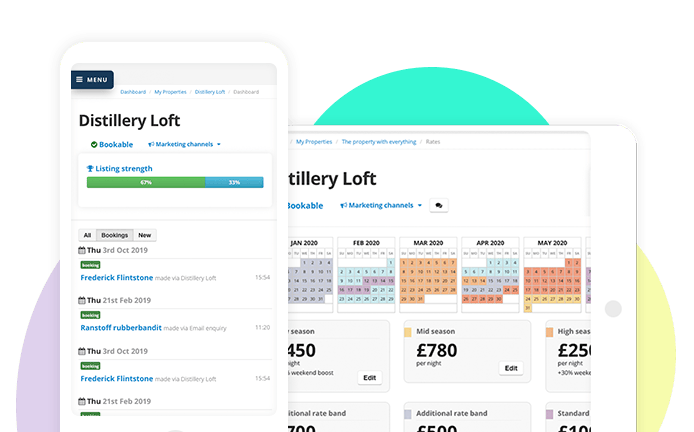
Graphic of Bookster property management interfaces

Bookster is designed to help holiday rental managers.

Free Walkthrough… or get started now

Starting a new business can be daunting, and holiday rental businesses are no exception. So we gathered together experts from across the industry to help you attract and manage guests, and manage your bookings.


How To Manage Holiday Rentals - Advice from 7 experts in the short let industry on how to manage holiday rentals

It used to be that once a website was created, it was ticked off the list as a completed project. But times have changed.

What managing a holiday rental actually involves

Managing a holiday rental is running a small hospitality business. Unlike a standard residential tenancy - where a tenant handles most day-to-day matters - short-term letting puts everything on you: marketing, bookings, guest communication, cleaning, maintenance, compliance, and finances. The turnover is high, the expectations are higher, and problems rarely wait for a convenient moment.

Done well, it's a rewarding business. Done without the right systems in place, it becomes relentless. The rest of this guide sets out what those systems look like.

Legal and regulatory requirements

Before you take a single booking, you need to be confident your property meets the legal requirements for short-term letting. Getting this wrong isn't just a compliance risk - it's a liability one.

Safety checks you must have in place:

  • Gas safety - an annual Gas Safety Certificate from a Gas Safe registered engineer is a legal requirement if the property has any gas appliances.
  • Electrical safety - PAT (Portable Appliance Testing) of plug-in appliances and a periodic EICR (Electrical Installation Condition Report) for fixed wiring. There's no fixed legal interval for holiday lets, but annual PAT testing and a five-yearly EICR are widely recommended.
  • Fire safety - working smoke alarms on each floor, a carbon monoxide detector near any solid fuel or gas appliance, a fire extinguisher, and a fire blanket in the kitchen. Larger or higher-risk properties may require a formal fire risk assessment.
  • Insurance - standard home insurance doesn't cover short-term letting. You need specialist holiday let insurance, with public liability cover as a minimum.

Licensing and registration:

  • Scotland - short-term let licensing is mandatory. All properties must hold a licence from their local authority before accepting guests. The scheme has been fully in force since October 2023.
  • England - a mandatory registration scheme for short-term lets is being introduced. Some areas also apply planning restrictions if a property is let for more than 140 days per year; check with your local authority.
  • Wales - a national registration scheme is in place for all holiday let operators.

Tax rules changed in April 2025, when the Furnished Holiday Let (FHL) regime was abolished. If you were benefiting from mortgage interest relief or capital allowances under the old rules, take updated advice from a holiday let accountant. These requirements also evolve, so build in an annual compliance review.

Setting up and equipping your property

First impressions matter enormously in holiday letting. Guests compare your property to hotel standards and review everything publicly. Before you list, make sure the basics are genuinely good: a comfortable bed, quality linen, reliable Wi-Fi, adequate cooking equipment, and a clean, well-maintained space.

Think through the guest journey from arrival to departure. Is access clear? Are the appliances intuitive? Is there a welcome pack with the essentials - Wi-Fi password, bin day, how to use the heating? A well-prepared welcome pack reduces guest queries and improves reviews. See our welcome pack ideas for holiday lets for a full list of what to include.

Document everything before your first guest arrives - photos, inventory, condition - so you have a baseline for damage deposit claims and maintenance checks. If you're managing multiple properties, label linens so your cleaning team can track and replenish them accurately.

Marketing your property across platforms

Booking Platforms

Most guests start their search on the major online travel agencies (OTAs): Airbnb, Booking.com, Vrbo, and TripAdvisor. Being on all of them increases your reach and reduces the risk of over-relying on any single channel.

The challenge is keeping availability and pricing consistent across platforms. If you manage each calendar manually, double bookings are a matter of time. A channel manager solves this by syncing your calendars and rates in real time across all connected platforms, so a booking on one site immediately blocks the same dates everywhere else.

Direct Bookings

Alongside the OTAs, your own direct booking website is your most valuable long-term marketing asset. Direct bookings carry no commission - OTAs typically charge 15–20% - and guests who book direct tend to return. Photography, listing copy, and a consistent flow of reviews all affect how prominently the platforms rank you. Strong photos are the single biggest return on investment at the listing stage. For more on where to advertise, see our guide to advertising your holiday home for free.

Pricing and revenue management

Flat-rate pricing leaves money on the table. Most successful holiday let managers use seasonal rates at a minimum: higher prices during school holidays and peak summer weeks; lower base rates for shoulder and off-peak periods. Some also adjust on lead time - nudging prices down as a check-in date approaches to fill gaps, or up at the last minute when demand is high.

You don't need to obsess over dynamic pricing tools, but you do need a clear rate structure. Set your minimum stay requirements carefully - a two-night minimum might maximise occupancy in summer but hurt you in quieter periods where longer stays would otherwise fill the calendar.

Don't overlook the cost side of the equation. Management fees, cleaning costs, OTA commissions, and software subscriptions all affect your net income. Our guide to holiday let costs walks through what to budget for.

Managing bookings and guest communication

Booking management is where most of the admin lives. Enquiries need quick responses - response time directly affects your ranking on most OTAs - bookings need confirmations, pre-arrival information needs to reach guests at the right time, and review requests need to follow up after checkout.

Doing this manually across multiple properties and platforms becomes unmanageable quickly. Automated guest communication templates - triggered by booking confirmation, pre-arrival, check-in day, and checkout - save hours every week and ensure nothing gets missed. Most property management software includes this as standard.

For the check-in itself, consider a keybox or smart lock. It removes the need for in-person key handovers and lets guests arrive flexibly. Make sure the access instructions are sent automatically, clearly, and with enough notice - ideally the morning of check-in day.

Cleaning and property maintenance

Negative reviews of holiday rentals are most commonly triggered by cleaning. It's what guests notice first and mention most. Getting it right - consistently, from the start - is foundational to your reputation.

A few things that make a real operational difference:

  • Arrange changeovers on check-out day rather than check-in day, so you have the full day to address anything that needs attention before the next guests arrive.
  • Label and photograph your linens at the start so your cleaning team can track condition and flag when replacements are needed.
  • Give your cleaning company a small contingency budget and authority to deal with minor issues on the spot - a broken mug or a faulty lamp fitting shouldn't require a phone call to resolve.
  • For same-day turnarounds between back-to-back bookings, build the time requirement into your minimum stay policies rather than trying to compress an impossible schedule.

Maintenance runs on a similar principle. Keep a log of recurring jobs - boiler service, smoke alarm testing, gutter clearing, garden maintenance - put them in a shared calendar, and don't wait for guests to flag problems. A proactive check between bookings prevents small issues becoming bad reviews.

Choosing holiday rental management software

Holiday rental management software ties all the operational threads together. Rather than managing calendars in a spreadsheet, chasing cleaning confirmations by text, and reconciling income manually, good software centralises everything in one place.

The core things to look for when evaluating holiday letting management software:

  • Channel management - syncs your availability and rates across Airbnb, Booking.com, Vrbo and others automatically. Non-negotiable if you list on more than one platform.
  • Direct booking website - your own bookable website, branded to your business, so guests can book without you paying OTA commission.
  • Automated guest communications - booking confirmations, pre-arrival instructions, check-in access codes, review requests. Set them up once and they run themselves.
  • Owner statements - if you manage properties on behalf of owners, automated statements that show gross income, deductions, and net payout save significant time each month and make your service look professional.
  • Damage deposits - automated collection and release, so neither you nor the guest needs to think about it.
  • Reporting - occupancy rates, income by property, booking source breakdown. You need clean data to make good pricing and marketing decisions.

As Craig Douglas of Reserve Apartments puts it: "Having a good platform so you can use many channels is vital, and the flexibility of your platform is key." That flexibility matters most when your business grows and your setup needs to adapt with it.

Bookster is built specifically for independent holiday letting agencies and property managers in the UK. It covers channel management, a direct booking website, automated communications, owner statements, and damage deposits - all in one platform. You can explore the full feature set here or book a free walkthrough to see how it fits your business.

Financial management and reporting

Holiday letting income needs to be tracked separately from personal finances from day one. You'll need to reconcile income from multiple platforms - each with different payment schedules and commission structures - manage cleaning and maintenance costs, and produce clear records for HMRC.

Set up a dedicated bank account for the business. Use accounting software that handles multiple income streams, or work with a bookkeeper who is familiar with short-term lettings. Your property management software should produce the income summaries - per property, per period - that feed into your accounts without manual reconciliation.

If you manage properties on behalf of owners, monthly owner statements are a professional necessity and a meaningful part of your service offer. Good holiday rental management software generates these automatically from the booking data it already holds.

With the FHL regime gone since April 2025, review your tax position with a specialist accountant if you haven't already. VAT threshold, income tax treatment, and allowable expenses are all worth getting right.

Managing remotely

Many holiday rental managers don't live near their properties, and that's entirely workable - provided the right systems are in place before a problem arises.

The essentials for effective remote management:

  • Smart locks or keyboxes - guests receive a code in advance; you never need to be present at check-in. Change codes between guests automatically if your system supports it.
  • A reliable local contact - a cleaner who can also act as your eyes on the ground between bookings is the most important relationship in remote management. This person is your first response to anything physical.
  • Noise monitoring - devices such as NoiseAware alert you if noise levels become unusually high without recording any audio. Useful for properties in noise-sensitive areas or those with party policies.
  • Property management software - a single dashboard showing all bookings, upcoming changeovers, and guest messages means you can manage everything from wherever you are, on any device.
  • Automated communications - if guests can reach you easily and get clear, quick answers to common questions, most issues resolve before they escalate.

The agencies that manage holiday rental properties remotely most successfully have invested in strong local partnerships and good automation. Technology handles the routine; your local team handles the physical.

Some Advice from the Experts

Karen Blair, Director - Edinburgh-Flats

If you are a rental company or landlord considering moving to holiday rentals, it's important to weigh up what you expect from the business and your circumstances.

Short let rentals can be more lucrative than residential lets with up to 30% more income, however, they may not suit everyone. 

Short let rentals can have periods when a property may be vacant, so they appeal to landlords:

  • Who are less reliant on a consistent rental income
  • Who would like some personal usage of the property
  • Who have properties that are only empty for short periods – perhaps between longer-term tenancies, or when they are away from their home for a period.

It is recommended that landlords consider long-term residential lets for more guaranteed monthly income to service the mortgage and bills.

Read more advice from Karen Blair in Short Let Rentals Essentials : A quick guide for those considering moving to the industry.


Eddie Harper, Director - Harpers Concierge

A common oversight is that agencies underestimate that at the heart of this business there are physical assets that require care and attention - the holiday rental property itself, as well as the guests.

A misconception is that you simply need to advertise, take bookings and then schedule a cleaner for the changeover.

This can work for a while, and then start to unravel. This can have a significant effect on guest reviews.

Having someone very familiar with the property on the ground regularly (ideally between every booking) is essential to identify and deal with potential or current issues.

It's great if your dedicated cleaner can also serve this function, however, this isn't a realistic scenario if you have multiple listings and same-day turnarounds. 

If you look after your properties this will be reflected in your reviews, and you will stand out from the competition.

This will give you the best long-term results with both your rental return and occupancy levels - which is the aim of the game.

Read more details from Eddie Harper in Concierge tips for holiday rentals


Craig Douglas, Director - Reserve Apartments

There are a number of key aspects to consider before you start a self-catering business.

1. Plan procedures to support you
You need to create procedures, professional emails, and templates as much of the work are repetitive.
There are lots of tools out there to help you with this.

2. Choose a robust software
Remember that bookings are the lifeblood of your self-catering business.
Having a good platform so you can use many channels is vital and the flexibility of your platform is key.

3. Organise your accounts
Accounting for your business is also vital.
It is one thing to achieve a lot of profitable bookings but you need reports and accounting capabilities or you will quickly tie yourself in knots.

4. Meet and share experiences
Go networking and learn from more experienced operators.
There are a lot of like-minded people out there willing to share and help. 

Read more details from Craig Douglas on 4 tips for starting a self-catering business


Robin Morris, Director - Bookster Property Management System

Starting any new business can be a scary time and using the right tools right is critical.

Here is my top tip for selecting the best property management services for your vacation rental business: 

Decide on your priorities!

All software is a reflection of the priorities (and capabilities) of the team behind it - they constantly make decisions about which problems to tackle… and which ones to push down the road for another day.

It's important to understand that any platform will likely have some functionality missing that you may consider important.

The key to making the software work for you is the ability to accept different work-flows and to adapt your business processes with the software.

The first step is to consider what the really important software features and tasks are for your vacation rentals.

Write them down, and order them in importance. You may not get everything on your list, but you should focus on getting the most important tools for you.

Check out the rest of Robin Morris’ 4 tips for choosing a holiday rental booking software


Aga Sawka, Director - Pink Cleaning Aga

Negative reviews of holiday rentals and Airbnb short-stay rentals are often a result of guests’ dissatisfaction with the quality of cleaning.

The quality, efficiency, and price of this task can have a significant effect on your business. It is important to get all these aspects correct from the start.

There are a number of tasks that you should plan before you allow guests in your holiday rentals.

We've listed the tasks you should plan together with your cleaning company:

1. Pre-rental self-catering tasks

Sit down with your cleaning company and plan the tasks that need to be undertaken before your photos are taken and your guests arrive. 

Although the tasks may feel time-consuming at a time when you're keen to get up and running, it will make a big difference to your business reputation to do these correctly in advance.

2. Arrange the cleaning schedule

Some property managers arrange cleaning on check-in days, and others on check-out days. We recommend arranging these on the check-out day. 

3. Linen management for holiday homes

To track the cleaning of your linens, it's important to take time to label and photograph your linens and discuss this with your cleaning company. 

4. Contingency plans

Things do go wrong with holiday rentals.

Giving your cleaning company the authority and budget to go ahead and resolve small problems can make a big difference to your guest experience.

5. Provide sufficient keys

Depending on the services your cleaning company will provide you, you need to provide sufficient keys.

6. Cleaning turnarounds

There are a number of aspects to consider for cleaning turnaround times. This includes:

  • the length of time required to clean
  • the cost and availability of parking
  • tasks required for each clean
  • tasks required if a reduced turnaround time is available.

7. Communicate with your cleaners

Clear communication is important, to prevent and resolve any problems that may arise. 

Read further details for each of these tips from Aga at 7 Holiday Home Cleaning Tips.

Graphic of Bookster property management interfaces

Designed for you.

Bookster is built to help holiday rental managers do what they do.

Free Walkthrough… or get started now