What is a channel manager and do holiday let owners need one?
3 minute read // updated
 by Kelly Odor, Marketing Professional
Key Takeaways
- A channel manager keeps your availability and rates in sync across every OTA
- Without one, managing multiple listing platforms manually creates real risks
- Most holiday let owners listing on two or more sites will benefit from one
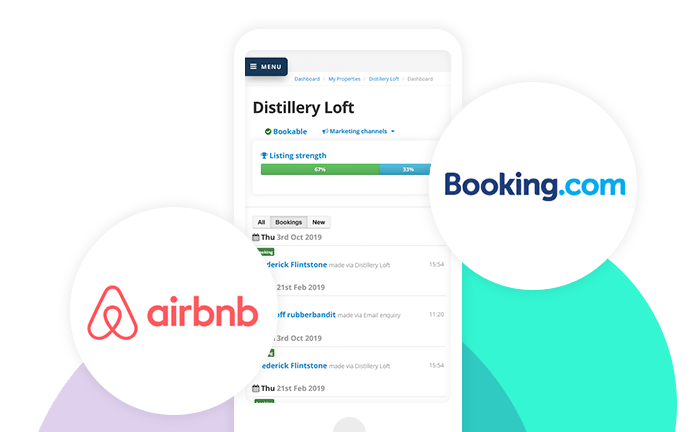
If you’ve listed your holiday property on Airbnb, Booking.com, or Vrbo, you’ve likely wondered how to keep everything in sync without spending your evenings updating calendars. A channel manager solves this problem. This post explains what it is, how it works, and whether you need one.
What is a channel manager?
A channel manager is software that connects your holiday property listing to multiple booking platforms - known as OTAs (online travel agencies), such as Airbnb, Booking.com, and Vrbo - and keeps them all in sync from one place.
Without a channel manager, each platform holds its own separate calendar and rate information. When a booking comes in on Airbnb, you need to manually block those dates on Booking.com and everywhere else. A channel manager does that automatically - updating availability, rates, and minimum stays across every connected platform the moment something changes.
How does a channel manager work?
Most channel managers connect to OTAs in one of two ways: via iCal or via API.
iCal is a calendar file format that platforms can export and import. It works, but it has a significant limitation: it doesn't sync in real time. Depending on how often each platform refreshes the iCal feed, there can be a delay of anywhere from a few minutes to 24 hours between a booking being made and other calendars updating. That window is where double bookings happen.
API (application programming interface) connectivity is a direct, two-way connection between the channel manager and each platform. When a booking comes in, the API communicates with every connected OTA instantly - updating availability in seconds rather than hours. This is the connection type to look for in any channel manager worth using.
A good channel manager operates a two-way sync: it pulls incoming bookings from each platform and pushes availability updates back out. This means you always have a single, accurate picture of what's booked and what's free.
What does a channel manager actually do for you?
The core function is keeping your calendars in sync. But most channel managers also handle:
- Rate management - set your nightly rate once and push it to every channel, or configure platform-specific pricing from a single dashboard
- Minimum stays - update minimum night requirements across all platforms at once, useful for managing changeover days or shoulder season gaps
- Availability rules - configure booking windows, preparation time between stays, and advance notice requirements in one place
- Listing consistency - some channel managers can also push content updates (descriptions, photos, amenities) to connected platforms
The practical effect is that you stop logging into each platform individually to make the same change in three different places. You make it once, and it goes everywhere.
Do holiday let owners actually need one?
The honest answer depends on how you're currently letting your property.
If you list on only one platform and have no direct booking website, a channel manager probably isn't necessary right now. Your availability lives in one place and there's nothing to sync.
If you list on two or more platforms (or if you take any bookings directly and need to then close availability on OTA listings) then yes, a channel manager is worth having. Managing multiple platforms manually is time-consuming and, more importantly, it's unreliable. The risk of a double booking grows with every additional channel you add.
Here's a simple way to think about it: if updating your rates or blocking a date currently means logging into more than one platform, a channel manager will save you time. If you've ever had a near-miss with a double booking, it will also reduce your risk considerably.
Channel manager vs property management system - what's the difference?
A channel manager focuses specifically on connecting and syncing your listings across OTAs. A property management system (PMS) does that and more - it's a broader operational platform that also handles guest communications, booking management, owner statements, cleaning schedules, reporting, and often a direct booking website.
Many providers, including Bookster, offer both within the same platform. That means your channel manager and your PMS share the same calendar - so when a booking comes in from any source, everything updates together automatically.
If you're just starting out and want to solve the multi-platform sync problem, a channel manager alone may be enough. If you're managing multiple properties or running an agency, a combined PMS and channel manager is usually more practical - you get the sync benefits alongside the operational tools you'll need as you grow.
What to look for in a channel manager
Not all channel managers are equal. When evaluating options, the key things to check are:
- API connectivity - confirm which channels connect via API (real-time, two-way) and which rely on iCal. For your most important booking platforms, API is essential.
- Channel coverage - does it connect to the specific OTAs you use? This sounds obvious, but the list varies significantly between providers.
- Two-way sync - the channel manager should both pull bookings from OTAs and push availability updates back. One-way connectivity only solves half the problem.
- Speed - ask how quickly availability updates push after a booking is confirmed. Seconds is the right answer.
- Support - when something goes wrong with a channel connection, you want to be able to reach someone quickly. Check what support is included and how responsive it is in practice.
Frequently Asked Questions
- What's the difference between iCal sync and API connectivity in a channel manager?
- iCal syncs calendars on a schedule and can have delays of up to 24 hours. An API connection communicates directly with each platform in real time, updating availability within seconds of a booking being made. For any platform you rely on heavily, API connectivity is the safer option.
- Can a channel manager help me take direct bookings as well as OTA bookings?
- Yes - most channel managers can connect to a direct booking website so that bookings from your own site update your OTA calendars automatically, and vice versa. This removes the need to manually block dates whenever a direct booking comes in.
- Will a channel manager update my rates on Airbnb and Booking.com automatically?
- A channel manager lets you push rate changes to all connected platforms from one place. Whether it does this automatically or on demand depends on the provider and how you configure it. Some also support platform-specific pricing, so you can charge different rates on different OTAs if needed.
- Is a channel manager the same as a property management system?
- No, though they often come bundled together. A channel manager handles OTA connectivity and calendar sync. A property management system (PMS) is a broader platform covering guest communications, booking management, reporting, owner statements, and more. Many providers - including Bookster - offer both in one platform.
- How many OTAs should I be listing on before a channel manager becomes necessary?
- As soon as you're active on two or more platforms, the manual work of keeping calendars in sync becomes a real risk and a real time cost. Most owners find that a channel manager pays for itself quickly once they're managing more than one active listing channel.
- What happens if my internet goes down - does availability go out of sync?
- Reputable channel managers are cloud-based and designed for high uptime. A brief interruption on your end won't affect the connection between the channel manager and the OTAs. It's worth asking any provider about their uptime record and how they handle outages on their side.
A channel manager is one of those tools that's easy to overlook until you realise how much time and risk your current setup is carrying. If you're listing on more than one platform, the question isn't really whether you need one - it's which one is right for your operation.
Bookster's channel manager connects to the major OTAs via API, keeping your calendars and rates accurate in real time across every platform. It sits within Bookster's wider property management system, so your guest communications, owner statements, and booking management all work from the same source of truth.
If you'd like to understand how a channel manager would fit into your current setup, a free Bookster Walkthrough is a good starting point. It's a 30-minute call where we look at your channels, your current sync approach, and where the gaps are - with no obligation to act on anything we find.