Signs you've outgrown your current holiday let setup
5 minute read // updated
 by Robin Morris, Co-Founder + Managing Director
Key Takeaways
- Most owners outgrow their setup gradually and the warning signs are easy to miss
- Manual processes that worked for one property rarely scale to two or more
- The right software doesn't just save time… it reduces the risk of costly errors
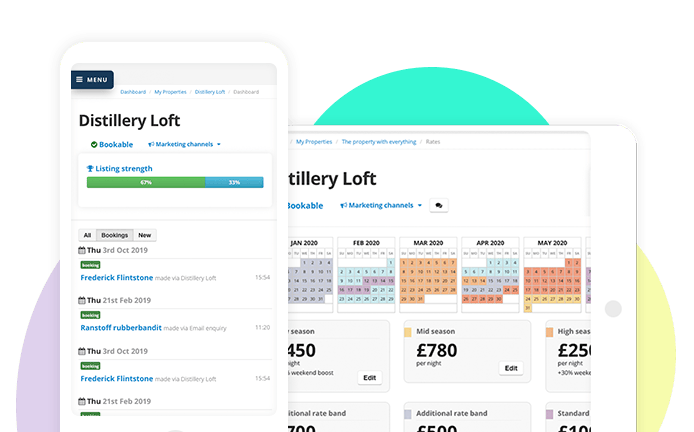
When you first let your property, a spreadsheet and a few iCal links were probably sufficient. However, most owners find that their initial setup can become problematic.
Here, we highlight the signs that your current approach is costing you time, bookings and peace of mind.

You're repeating the same tasks for every booking
Consider your process for handling new bookings. Do you manually send confirmation, check-in instructions, and review requests? If you’re typing or copying these messages repeatedly, your setup may be hindering your efficiency.
Automated guest communications are both a convenience and a consistency tool. They ensure guests receive the right information at the right time, improving their experience and saving time. If your manual approach isn’t working, it’s time to consider automation.
You feel nervous when a booking comes in on a second platform
This one is telling. If your first instinct after receiving a booking on Booking.com is to quickly check that the dates aren't already taken on Airbnb - and to manually block them if they're not - your calendar management is running on anxiety rather than automation.
A well-set-up system shouldn't require you to do anything when a booking arrives. Availability should update across every channel automatically, in real time. If you're doing that manually, or relying on iCal sync (which can have delays of up to 24 hours), you're carrying a risk you don't need to carry.
Adding a second property felt like doubling your workload
Growth should mean more bookings, not proportionally more admin. If you added a second property - or took on a second client - and found that your workload doubled rather than growing incrementally, that's the clearest possible sign that your processes don't scale.
A property management system (PMS) is designed specifically for scaling. Booking confirmations, calendar updates, owner statements, cleaning schedules, guest messages - these should happen largely automatically, regardless of whether you're managing one property or twenty. If they're not, the bottleneck is your setup, not your capacity.
Your guest communications are inconsistent
Cast your mind back over your last ten guest stays...
- Did each guest receive the same quality of pre-arrival information?
- Did everyone get check-in instructions in good time?
- Did you remember to send a review request after each checkout?
If the honest answer is "mostly, but not always", that inconsistency is costing you. Late or missing information leads to unnecessary questions from guests. Missed review requests mean fewer reviews - and in a market where reviews directly influence booking rates, that's a real commercial impact.
Automation removes the inconsistency.
You can't answer basic questions about the business
Here's a quick test: without looking anything up, do you know...
- your occupancy rate for the last three months?
- Your average booking value?
- Which channel is driving the most revenue?
If those answers aren't readily available, you're operating without data. That makes it very difficult to make good decisions about pricing, marketing, or which channels to invest in. A PMS should surface this information automatically - not as a luxury feature, but as a basic operational requirement.
Listing on multiple OTAs & managing them separately
OTAs (online travel agencies) like Airbnb, Booking.com, and Vrbo are valuable distribution channels. But managing each one separately - updating rates, adjusting minimum stays, responding to availability requests - is time-consuming and creates inconsistency between listings.
If you're currently logging into each platform individually to make changes, a channel manager can consolidate that into a single interface. Update your rates once, and they push to every channel. Block a date once, and it closes everywhere. This alone can reclaim a significant amount of time each week.
You know something is going to go wrong - you just don't know when
Perhaps the clearest sign of all. If you have a background sense that your current setup is fragile - that a missed email, a miscommunicated check-in time, or a calendar clash is eventually going to cause a problem - that instinct is worth listening to. It means you already know the risk is there.
A good holiday letting setup should feel reliable, not precarious. If it doesn't, the question isn't whether to change it - it's when.
Frequently Asked Questions
- At what point should I consider switching to a property management system (PMS)?
- There's no fixed threshold, but common triggers are: managing more than one property, listing on more than one Website / OTA, finding that guest communications are becoming inconsistent, or noticing that your admin time is growing faster than your income.
- Is property management software worth it if I only have one property?
- It can be, particularly if you're active on multiple channels or want to run automated guest communications. Even with a single property, the time savings and reduced risk of errors can make it worthwhile - though it's worth evaluating based on your specific situation.
- What's the difference between a channel manager and a property management system?
- A channel manager connects your property listings across multiple OTAs, keeping calendars and rates in sync. A property management system (PMS) does this and also handles the broader operation - guest communications, owner statements, reporting, cleaning schedules, and more. Many providers, including Bookster, offer both within the same platform.
- Will switching to new software disrupt my existing bookings?
- A properly managed migration shouldn't affect existing bookings. Your provider should be able to import current reservations and reconnect your channels without guests noticing any change.
- How do I know if my current iCal setup is reliable enough?
- iCal syncs calendars on a schedule rather than in real time, which means there's always a window - sometimes up to 24 hours - where a new booking on one platform hasn't yet closed availability on others. If you're active on more than one OTA, that lag is a real risk. API connectivity removes it.
Most holiday letting owners don't realise they've outgrown their setup until something goes wrong. The goal is to recognise the signs before that happens - while things are still manageable but the direction of travel is clear.
If several of these signs feel familiar, it's probably worth looking at what a proper property management system could do for your operation. Bookster is built for independent agencies and property managers who've reached exactly this point - capable enough to have built a letting business, ready to run it more efficiently.