
What is a Property Management System (PMS)?
7 minute read // updated
 by Robin Morris, Co-Founder + Managing Director
Key Takeaways
- A PMS brings bookings, calendars, payments and guest messages into one place
- Direct connections to Airbnb, Vrbo and Booking.com stop double bookings
- Automated payments and deposits mean you no longer chase guests for money
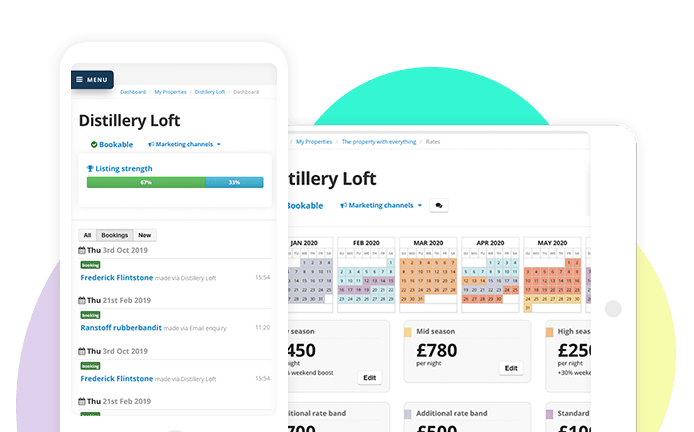
Most letting agencies start out with a diary, a spreadsheet and an inbox. That works for a handful of properties. Then you add more owners, list on more channels and take on a cleaner or two, and the cracks start to show. A property management system is the tool that fills them. Here's what a PMS is, what it does day to day and how to know when it's time to use one.
A property management system replaces the diary, spreadsheet and scattered inboxes with one place to run your business.
What is a property management system?
A property management system (PMS) is software that runs the day-to-day business of your holiday lets from one place. Bookings, calendars, payments, guest messages and the information guests need all live in the same system, and everyone on your team works from it.
You'll hear the term in hotels too, but a hotel PMS is built around rooms in a single building. A holiday rental PMS, sometimes called holiday letting software or vacation rental software, is built around self-contained properties, the owners who own them and the booking sites that sell them, such as Airbnb, Vrbo and Booking.com.
What a PMS does for a letting agency
1. Organise
It gets you organised.
A PMS puts structure into the way you work. You record every booking the same way, every time, because the system asks for the same details. That consistency matters more than it sounds.
- Every booking and every property is stored in one place, so you can see what's happening at a glance
- Someone else can step in and understand what's going on when you take a holiday
- New staff learn one process instead of everyone's personal workarounds
The agencies that get the most from a PMS tend to go with the flow of how it's set up, rather than bending it to match old habits.
2. Double Bookings
It stops double bookings.
This is simple, but it's often the reason agencies start looking for software in the first place. You log into one place to record a booking or block out dates, and the PMS pushes that update out to every site your property is listed on.
There are two ways to connect to those sites:
- iCal: a calendar feed that each site checks periodically. It's widely supported but can lag, which leaves a window for a clash.
- Direct connection: a live link between your PMS and Airbnb, Vrbo or Booking.com. Updates arrive faster and more reliably, which gives you a much better experience.
A good PMS also lets you hold dates for a quote. If a guest is deciding, you can block the dates while they think it over, without risking someone else booking them in the meantime.
3. Direct Bookings
A PMS can allow you to take direct bookings.
Direct bookings come through your own website, so you keep the guest relationship and avoid paying commission to a booking site. A PMS makes this possible by putting a "book now" button on your site that checks live availability and prices.
That was the reason Bookster was started. Guests don't want to send an email and wait two days for a reply. They want to book now, and if they can't, they'll go back to Google and book somewhere else.
- Add a booking widget to the website you already have
- Use Bookster's Instant Website if you don't have one yet
- Share booking links on Facebook or Instagram, even without a website
4. Payments
It collects payments for you.
A PMS lets guests pay you in a convenient way and keeps track of what's owed. It takes the initial payment when the guest books, then requests the balance automatically when it falls due. You no longer need to chase guests for money, because the system does it for you.
5. Damage Deposits
A PMS can handle damage deposits for you.
Taking and returning damage deposits by hand is a bit of a faff. Bookster can take the deposit for you and return it automatically after departure, so you only need to step in when something has actually been damaged.
6. Guest Messaging
A PMS can put guest messages into one inbox.
Without a PMS, guest messages arrive in your email, the Airbnb app, the Booking.com extranet and the Vrbo dashboard. With one, you log into a single place to read and reply to all of them, whether the guest booked direct or through a booking site.
7. Guest Information
A PMS can give guests everything they need in one place.
Guests ask the same questions before every stay. A PMS answers them with a guest area that holds everything about their booking, such as:
- Payment status
- Booking terms
- Arrival information
- Wi-Fi codes
- Departure information
Bookster also has a Guest Assistant that guests can chat to, so they can get answers without waiting for you to reply.
8. Collaborate
A PMS can let your team work well together.
Your cleaners, housekeepers and colleagues can log into the PMS to see bookings, check upcoming arrivals and keep on top of what's happening at each property. With the right access, they can also message a guest or answer a guest's question themselves.
Why agencies need more than a single owner
An owner with one cottage can just about manage with a calendar and an inbox. An agency can't, because everything multiplies: more properties, more owners, more channels and more people touching each booking.
A PMS built for agencies also helps you look after your owners. Owner logins and owner statements show each owner their bookings and income without you having to compile reports by hand, which keeps them informed and keeps them with you.
Signs it's time for a PMS
You probably need a property management system if any of these sound familiar:
- You've had a double booking, or a near miss
- You spend time each week chasing balances or returning deposits
- Guest messages are spread across several apps and inboxes
- Only one person really knows what's booked and when
- Guests email to ask about availability because they can't book on your website
- Owners regularly ask you for updates on their bookings
What to look for when you choose a PMS
- Direct connections to Airbnb, Vrbo and Booking.com, not just iCal
- Direct booking tools: a booking widget for your website, or a website included
- Automated payments for deposits, balances and damage deposits
- A single inbox for messages from every channel
- A guest area that answers questions before guests need to ask
- Team and owner logins so everyone sees the information they need
When you speak to software providers, ask them to show you each of these working on a demo rather than describing them.
Frequently Asked Questions
- What does PMS stand for in holiday letting?
- PMS stands for Property Management System. It's the software a holiday letting agency or owner uses to manage bookings, calendars, payments, guest messages and team access in one place.
- What's the difference between a PMS and a channel manager?
- A channel manager keeps your availability and rates in sync across booking sites such as Airbnb, Vrbo and Booking.com. A PMS usually includes a channel manager, and adds direct bookings, payments, guest messaging and team tools on top.
- Can I use a hotel PMS for holiday lets?
- Usually not well. Hotel systems are built around rooms in one building, while holiday lets need tools for separate properties, owners, damage deposits and booking sites like Airbnb and Vrbo.
- Is iCal enough to stop double bookings?
- iCal works, but sites only check the feed periodically, so there's a gap where two guests can book the same dates. A direct connection to Airbnb, Vrbo and Booking.com updates much faster and is far more reliable.
- Do I need my own website to take direct bookings with a PMS?
- No. You can share booking links on social media, and Bookster's Instant Website gives you a booking-ready site if you don't have one. If you do have a website, you can add a "book now" button to it.
- Can my cleaners and staff use the PMS?
- Yes. In Bookster, cleaners, housekeepers and colleagues can log in to see bookings and arrivals, and with the right access they can message guests too.
A property management system replaces the diary, spreadsheet and scattered inboxes with one place to run your agency.
It keeps your calendars in sync, takes bookings and payments while you're busy elsewhere, and gives your guests, team and owners the information they need without you in the middle.